2026 Best Industrial Quadcopter Types for Global Buyers

In 2026, global buyers are evaluating more than flight speed when selecting an Industrial Quadcopter. They need dependable performance, measurable safety, and practical support after purchase. A compact inspection model may serve factories well, while a larger platform may better handle surveying equipment or long-distance infrastructure checks. The details matter.

This guide examines major Industrial Quadcopter types for professional operations, including inspection, mapping, agriculture, emergency response, and heavy-payload applications. Each category has different demands. A thermal camera can reveal overheating electrical components, while an RTK system can improve positioning across construction sites. Weather resistance, battery-swapping time, obstacle sensing, noise levels, and data security also influence total value. These features should be tested under real working conditions, not judged only from brochures.

Reliable purchasing requires evidence. Buyers should review flight logs, payload tests, warranty terms, training options, spare-part availability, and regional service capability. Compliance with local aviation, workplace safety, privacy, and radio-frequency requirements remains essential. Specifications may appear impressive, but performance can change in strong wind, dust, cold temperatures, or crowded industrial areas. No single winner.

The market is not perfectly uniform. Some manufacturers publish limited field data, and stated endurance often excludes heavy payloads or difficult weather. That limitation deserves attention. By comparing aircraft design, mission equipment, operating costs, and supplier credibility, this overview helps global buyers make a more informed and realistic choice for 2026.
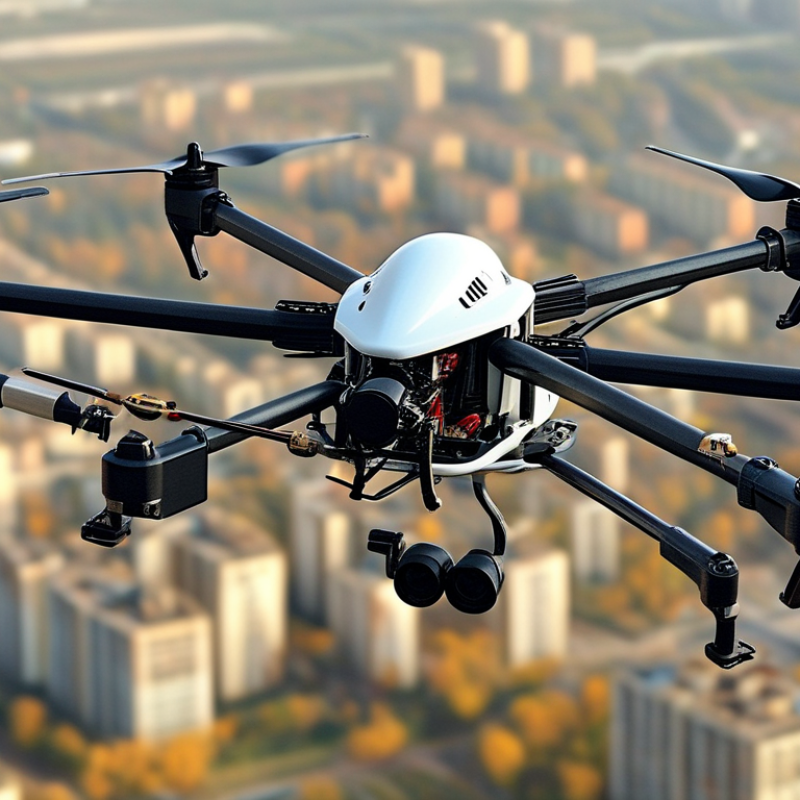
2026 Best Industrial Quadcopter Types for Global Buyers

What Defines an Industrial Quadcopter in 2026

In 2026, an industrial quadcopter is more than a larger camera drone. It is a field system designed for repeatable work, measurable safety, and controlled data handling. A useful model should lift its stated payload in real wind, not only in a showroom. Payloads may include a high-resolution camera, thermal sensor, laser rangefinder, or gas detector. Each adds weight and reduces endurance. That trade-off is easy to overlook. Industrial design starts with honest numbers.

Its airframe usually includes redundant flight controls, obstacle sensing, return-to-home logic, and battery health monitoring. Some systems support precise positioning through RTK or similar correction services. This can place inspection images within a few centimeters of known assets. Yet positioning accuracy depends on local signals, weather, and site conditions. “Centimeter-level” should never mean guaranteed everywhere. Operators still need visual checks.

For global buyers, the working environment matters as much as the aircraft. A mining site may demand dust protection and strong wind tolerance. A coastal inspection may require resistance to salt moisture. Cold regions can shorten battery life sharply. Certification, radio compatibility, encryption, and service access also vary by country. These details can decide whether a fleet works daily or remains unused in storage.

Experience shows that maintainability deserves equal attention. Replaceable arms, clear battery records, propeller inspections, and software logs reduce avoidable downtime. A reliable supplier should provide test evidence, training material, and realistic operating limits. Marketing language is not a maintenance plan. Buyers should request sample flight data and ask how failures are recorded. No quadcopter is perfect. A practical definition includes the people, procedures, and evidence surrounding the aircraft, not just its specifications.

Main Types of Industrial Quadcopters by Mission and Design

2026 Best Industrial Quadcopter Types for Global Buyers

Industrial quadcopters differ mainly by mission, payload, endurance, and operating environment. Inspection models use stabilized cameras, zoom lenses, and thermal sensors. They suit solar farms, bridges, roofs, and storage tanks. A technician can inspect hot panels without climbing a structure. Mapping models carry high-resolution imaging systems and support repeated surveys. They create useful terrain data for construction planning and site records. Short-range indoor models are smaller and safer around ceilings, pipes, and machinery. They often include obstacle sensing and protective frames.

Heavy-lift quadcopters serve industrial transport, environmental sampling, and approved delivery tasks. Their reinforced frames carry larger batteries or specialized equipment. However, greater payload usually reduces flight time. That trade-off is easy to underestimate. Long-endurance designs use efficient motors, larger batteries, and carefully balanced payloads. They work well across wide facilities, but they may need more launch space and stronger weather protection. Some platforms combine thermal, visual, and laser sensors for complex inspections. This flexibility improves data quality, though it can increase training and maintenance demands.

Buyers should match the aircraft to wind, temperature, dust, storage conditions, and local aviation rules. A rugged body helps near factories, but it adds weight. A compact design is easier to transport, yet it may carry fewer sensors. Field teams should test battery performance, image accuracy, return-to-home behavior, and repair access before purchase. One overlooked issue is workflow compatibility. High-quality images still fail when operators cannot process or share them reliably. Certified training and documented maintenance remain essential for safe industrial use.

2026 Best Industrial Quadcopter Types for Global Buyers — Main Types of Industrial Quadcopters by Mission and Design
Industrial Quadcopter Type Primary Mission Typical Design Configuration Typical Maximum Take-Off Mass Typical Payload Capacity Typical Flight Time Common Sensors or Equipment Key Buying Considerations
Surveying and Mapping Quadcopter Topographic mapping
Construction progress, stockpile measurement, corridor surveys and land management
Foldable or rigid electric airframe with precise navigation, downward imaging and automated flight planning 2–7 kg 0.2–1.5 kg 25–50 minutes RGB mapping camera, multispectral camera, LiDAR module, RTK/PPK positioning and laser altimeter Photogrammetric accuracy, positioning compatibility, payload integration, wind resistance, data-processing workflow and local flight regulations
Industrial Inspection Quadcopter Asset inspection
Bridges, towers, roofs, pipelines, solar farms and power infrastructure
Compact electric platform with stabilized gimbal, obstacle sensing and high-visibility navigation lighting 1.5–6 kg 0.3–1.2 kg 25–45 minutes Zoom camera, thermal camera, low-light camera, gas detector or ultrasonic thickness sensor Image resolution, optical zoom, thermal sensitivity, obstacle avoidance, inspection software, weather protection and safe operation near structures
Agricultural Spraying Quadcopter Crop treatment
Precision spraying, liquid application, field scouting and spot treatment
Heavy-lift electric frame with corrosion-resistant tanks, pumps, flow meters and downward spray booms 25–45 kg, depending on jurisdiction and configuration 10–30 L liquid tank capacity 8–20 minutes per battery cycle Flow-control system, terrain-following radar, multispectral camera, obstacle sensing and route-planning software Permitted use of agricultural chemicals, droplet-size control, spray width, cleaning requirements, spare batteries, pump reliability and operator certification
Cargo and Delivery Quadcopter Logistics
Short-range delivery of tools, medical supplies, samples and industrial parts
Reinforced electric airframe with enclosed or suspended cargo bay, redundant navigation and controlled release mechanism 10–35 kg 2–15 kg 15–35 minutes, depending on cargo mass GNSS/RTK, load sensor, obstacle detection, parachute or emergency-landing system and tracking modem Payload-to-range ratio, cargo security, delivery accuracy, take-off and landing space, airspace approval, fail-safe functions and battery logistics
Public Safety and Emergency Response Quadcopter Emergency operations
Search and rescue, disaster assessment, firefighting support and incident documentation
Rugged electric platform with rapid deployment, high-intensity lighting and stabilized multi-sensor payload 2–12 kg 0.5–3 kg 25–55 minutes Thermal camera, zoom camera, spotlight, loudspeaker, beacon, mapping camera and live-video link Low-light performance, secure communications, cold and rain tolerance, rapid battery replacement, remote identification and evidence-management capability
Indoor and Confined-Space Quadcopter GPS-denied inspection
Warehouses, mines, tunnels, factories, tanks and enclosed structures
Small protected frame with propeller guards, visual-inertial navigation and collision-tolerant construction 0.3–3 kg 0.05–0.5 kg 10–30 minutes Stabilized camera, thermal camera, LiDAR or depth sensor, gas detector and indoor positioning system Navigation without GNSS, propeller protection, communications through obstacles, lighting performance, dust resistance and operator training
Tethered Surveillance Quadcopter Persistent observation
Perimeter security, temporary communications relay, event monitoring and emergency command support
Electric quadcopter connected to a ground station by a power-and-data tether; often operated from a fixed or vehicle-mounted base 5–20 kg airborne mass 0.5–5 kg Several hours while tethered; usually 20–45 minutes untethered Daylight and thermal cameras, spotlight, radio relay, loudspeaker and secure video transmitter Tether length, ground-station power, maximum operating altitude, wind loading, cable management, grounding, electromagnetic compatibility and site permissions
Heavy-Lift Industrial Quadcopter Specialized lifting
Carrying industrial tools, sampling equipment, lighting systems and bulky sensors
Large coaxial or wide-arm electric configuration with high-torque motors, reinforced landing gear and modular payload mounts 25–80 kg 10–40 kg 8–25 minutes, depending on payload Load cell, stabilized camera, winch, lifting hook, spotlight, sampling tool or custom industrial instrument Motor and battery redundancy, structural load rating, payload security, emergency descent system, take-off area, noise level and regulatory category
Hybrid Long-Endurance Quadcopter Extended missions
Long-duration inspection, communications relay, remote monitoring and large-area observation
Quadcopter architecture using a generator-assisted or other hybrid-electric power system with larger fuel and cooling components 10–50 kg 1–10 kg 1–6 hours, subject to payload and fuel configuration Long-range EO/IR camera, communications relay, mapping sensor, satellite or cellular modem and health-monitoring system Power-system certification, acoustic signature, fuel handling, maintenance intervals, vibration control, redundancy, emissions and operating permissions

Data note: The figures are representative 2026 market ranges for industrial quadcopter configurations, not specifications for a particular manufacturer or model. Actual performance varies with payload, battery or fuel system, altitude, temperature, wind, flight profile and national aviation requirements.

Key Performance Features for Industrial Quadcopter Selection

2026 Best Industrial Quadcopter Types for Global Buyers

Industrial quadcopters now serve inspection, mapping, emergency response, and site security. Compact models suit indoor checks and narrow infrastructure. Heavy-payload models carry thermal, multispectral, or zoom sensors. According to Drone Industry Insights’ 2024 market report, the commercial drone sector is projected to exceed 50 billion dollars by 2030. Buyers should examine flight time, payload capacity, wind resistance, and operating temperature. A long advertised flight time is not always better. Battery aging, cold weather, and payload weight can reduce real endurance sharply.

Positioning accuracy also matters. RTK or PPK support can improve repeatable inspection routes and reduce mapping errors. Obstacle sensing, return-to-home reliability, and encrypted data storage support safer operations. MarketsandMarkets’ 2024 report forecasts strong growth in drone services, especially inspection and surveying. That growth increases pressure for dependable workflows, not merely impressive specifications. In field use, I prefer replaceable batteries, clear maintenance records, and visible sensor calibration data. Small omissions create large delays.

Tips: Test the aircraft with the actual payload. Measure flight time in local wind. Check IP protection, spare-part access, and software compatibility before purchase. Ask for independent test results, not only laboratory figures. A cheaper airframe may become expensive after repeated battery and sensor replacements. Safety margins should be documented, reviewed, and improved after every mission.

Global Buyer Comparison of Industrial Quadcopter Applications

Industrial quadcopters now serve different operational needs, so global buyers should compare applications before airframes. Drone Industry Insights’ 2024 Drone Market Report identifies inspection, mapping, and surveying as major commercial drone activities. These missions favor stable imaging, precise positioning, and dependable flight planning. A compact quadcopter suits roofs, bridges, and indoor facilities. A larger platform carries thermal, multispectral, or zoom cameras for wider industrial sites.

Application changes the buying decision. For construction mapping, buyers should examine mapping accuracy, terrain software, and battery exchange time. For power-line inspection, obstacle sensing and image detail matter more than maximum payload. Agriculture requires multispectral capture, repeatable routes, and practical field endurance. Grand View Research reported strong expansion in commercial drone services through 2030, reflecting broader demand for measurable inspection and monitoring results. Yet market forecasts can overstate adoption. A forecast is not proof of field reliability.

My field comparison would also include wind tolerance, repair access, data security, and operator training. A quadcopter flying beside a steel tower faces vibration, glare, and sudden gusts. Laboratory endurance figures may not survive those conditions. The International Energy Agency’s digitalisation reports show growing pressure to improve asset monitoring and reduce maintenance downtime. That pressure supports industrial drone investment, but each buyer still needs a controlled pilot project. Measure inspection time, repeatability, image quality, and total operating cost. Cheap hardware can become expensive when batteries, software, and skilled personnel are excluded.

Safety, Regulations, and Procurement Factors by Region

2026 Best Industrial Quadcopter Types for Global Buyers

Safety, Regulations, and Procurement Factors by Region

Industrial quadcopters now support inspection, mapping, emergency planning, and stockyard monitoring. The right type depends on risk, weather, payload, and local operating rules. A compact enclosed model suits indoor warehouses and crowded facilities. A rugged, weather-sealed model fits bridges, mines, and coastal sites. Thermal or zoom payloads help detect heat loss, damaged panels, and nighttime hazards. Do not buy from flight time alone. Payload weight, wind, battery temperature, and return-to-home limits change real performance.

Regional compliance must shape the purchase before technical trials begin. In the United States, buyers should confirm airspace permissions, remote identification duties, and pilot qualifications. They should also review operating limits under current federal rules. European buyers should check operational categories, class markings, operator registration, and geographic zones. Canada, Australia, Gulf states, and Asian markets may apply different licensing, import, and privacy controls. Rules can differ between a construction site and a city center. Verify details with the relevant aviation authority and a qualified local adviser. Regulations move faster than brochures.

Procurement teams should request test flights in realistic conditions. Use a roof at dawn, not only a showroom. Check obstacle sensing, link stability, encrypted data handling, battery transport, spare-part access, and repair time. Ask whether service technicians can work in the destination country. Local training matters, especially where language and airspace procedures differ. A low purchase price can hide costly batteries, software fees, or downtime. Field teams sometimes discover that a lighter payload is safer and more useful. That is a difficult lesson, but it improves the decision.


Close

Raise your Query

Hi! Simply click below and type your query.

Our experts will reply you very soon.

WhatsApp Us
