7 Best Silicon Carbide Balls for Industrial Applications
Silicon Carbide Balls are becoming practical choices for demanding industrial environments, where abrasion, heat, and chemical exposure quickly damage conventional ceramic media. Their extreme hardness supports use in grinding, milling, wear-resistant valves, shot blasting, filtration, and thermal-processing equipment. The surface can remain stable when steel alternatives deform or contaminate the process.
Industry data supports this expanding interest. Grand View Research reports that the global silicon carbide market was valued at approximately USD 4.1 billion in 2023, with strong growth expected through 2030. MarketsandMarkets also identifies rising demand from energy, automotive, electronics, and industrial applications. These reports usually measure silicon carbide broadly, not balls alone. That distinction matters.
Dr. John Palmour, a recognized silicon carbide materials expert and Wolfspeed co-founder, has described the material as “a very hard material with very high thermal conductivity.” That combination explains its appeal inside rotating mills, high-temperature reactors, and precision wear systems. However, hardness alone does not guarantee performance. Ball diameter, density, porosity, surface finish, purity, and production consistency can change operating results. A cheaper ball may create more dust, shorten maintenance intervals, or damage sensitive equipment.
This guide examines seven leading Silicon Carbide Balls for industrial applications. It compares material quality, durability, thermal behavior, chemical resistance, and practical value. The ranking is not absolute. Process conditions vary, and supplier data is sometimes incomplete. Real-world testing remains essential before large-scale adoption.
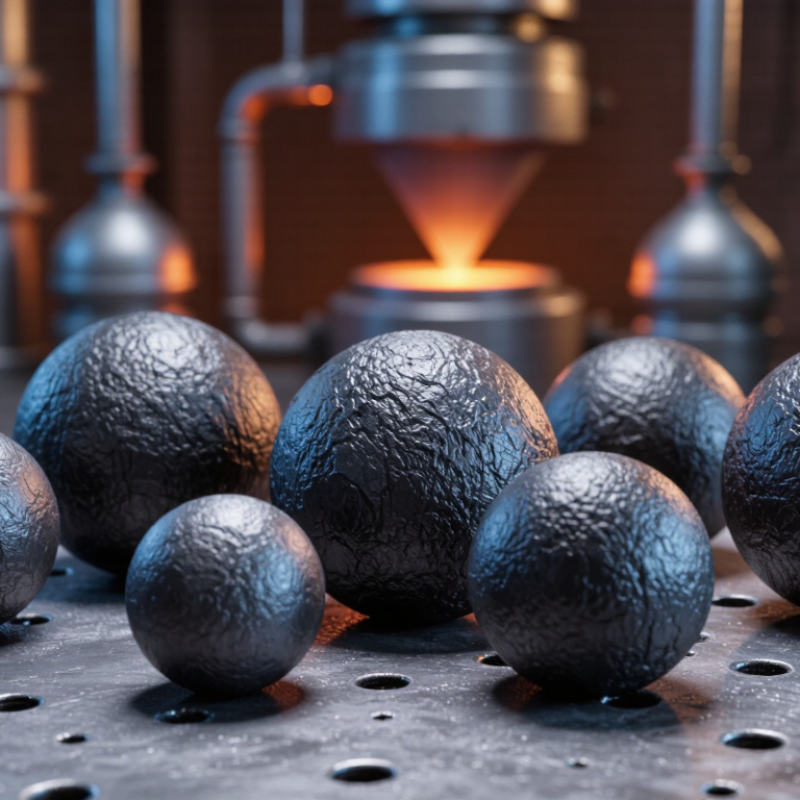
Silicon Carbide Balls: Properties and Industrial Functions
Silicon carbide balls are engineered ceramic components, not simple hard spheres. Their value comes from extreme hardness, low thermal expansion, and strong resistance to corrosion. They also tolerate high temperatures better than many metal alternatives. This combination supports demanding industrial work.
In grinding systems, SiC balls resist wear and reduce contamination during mineral or ceramic processing. In valves, their smooth surfaces help maintain stable sealing under abrasive flow. Precision grades can serve in bearings, pump assemblies, and chemical-handling equipment.
Some porous balls support gas distribution or high-temperature reaction processes. Electrical behavior varies with purity and structure, so conductivity should never be assumed.
Surface finish matters greatly. Size matters too. A rough ball can increase friction, while an oversized ball may damage mating parts. Engineers usually check hardness, density, porosity, dimensional tolerance, and thermal shock resistance before selection. Plant trials often reveal problems that laboratory data misses. That is worth remembering.
The seven most useful options are not defined by hardness alone. They may differ in diameter, grade, surface polish, porosity, or thermal stability. Dense balls suit impact and wear conditions. Porous types offer more contact area but may absorb fluids. I have seen specifications become too optimistic when chemical exposure was tested only briefly. Long-duration testing is safer, especially with hot acids, sudden temperature changes, or repeated mechanical loading. Reliable performance depends on matching the ball’s structure to its actual industrial function, not simply choosing the highest advertised hardness.
Key Criteria for Evaluating Silicon Carbide Balls
Evaluating silicon carbide balls starts with measurable properties, not catalogue language. The USGS Mineral Commodity Summaries 2024 identifies silicon carbide as a major abrasive and refractory material. That role demands consistent purity, density, and particle-free surfaces. High-grade balls typically show a density near 3.1–3.2 g/cm³ and Mohs hardness around 9–9.5, as reported in ASM Handbook data. Hardness matters. It is not enough.
Check size tolerance under a microscope or calibrated sieve. A 0.5 mm variation can alter flow, packing, and grinding behavior inside a narrow chamber. Ask for batch-level chemical analysis, especially free silicon, carbon, iron, and aluminum. These impurities may accelerate wear or contaminate processed materials. Test crushing strength at the actual operating temperature, not only at room temperature. Thermal shock resistance also deserves attention when balls move between heated zones and cooling stages.
In practical trials, roundness often receives less attention than purity. That is a mistake. Poor sphericity creates uneven contact, local stress, and irregular residence time. Request certificates tied to a production lot, not a generic product sheet. ISO 13356 is not a universal silicon carbide-ball standard, so supplier claims require independent verification. I would compare three batches using microscopy, density measurement, and wear-loss testing. The first result may look convincing. Repeat testing can disagree. That inconsistency is useful evidence, not an inconvenience.
7 Best Silicon Carbide Balls for Industrial Applications
Key Criteria for Evaluating Silicon Carbide Balls
The chart shows the theoretical mass of solid silicon carbide balls at common diameters, calculated using a representative density of 3.15 g/cm³. Ball diameter and mass are important when evaluating impact energy, handling requirements, wear behavior, and equipment load.
Additional selection criteria include high hardness, consistent sphericity, low porosity, dimensional tolerance, thermal-shock resistance, chemical compatibility, and surface finish. Actual mass may vary with material grade, porosity, and manufacturing tolerance.
Seven Leading Silicon Carbide Ball Options for Industrial Use
Seven Leading Silicon Carbide Ball Options for Industrial Use
Industrial buyers can choose among seven silicon carbide ball designs: pressureless-sintered, hot-pressed, reaction-bonded, recrystallized, nitride-bonded, precision-ground, and coated balls. Pressureless-sintered balls suit pumps, valves, and high-temperature bearings. Hot-pressed grades offer stronger mechanical performance under severe loads. Reaction-bonded balls cost less, but their residual silicon content may limit chemical resistance. Recrystallized balls perform well in extreme heat, although their porous structure needs careful review.
Precision-ground balls support tighter motion control in abrasive equipment. Coated balls can reduce friction, but coating adhesion must be verified after thermal cycling. Nitride-bonded options may balance thermal stability and manufacturing cost. The right choice depends on load, temperature, fluid chemistry, surface finish, and required dimensional tolerance.
The U.S. Department of Energy identifies silicon carbide as a wide-bandgap material capable of higher-temperature operation and lower switching losses than conventional materials. Yole Group’s 2024 power-silicon-carbide analysis also reports continued investment in SiC supply chains, driven by electrification and efficiency targets. These trends support wider industrial adoption, but they do not guarantee longer ball life. Field testing matters more than a datasheet. In practice, a finely ground ball can still fail when a seal traps abrasive particles. That detail is easy to overlook. ISO 3290-2 and ASTM C1161 provide useful reference points for ceramic-ball quality and mechanical testing, though application-specific validation remains essential.
Applications of Silicon Carbide Balls Across Major Industries
Silicon carbide balls serve demanding industrial environments where heat, corrosion, and abrasive forces challenge ordinary materials. Their high hardness supports stable performance in ceramic grinding, mineral processing, and fine-powder production. In these operations, the balls reduce contamination because they resist wear better than many metal alternatives. However, selecting the wrong diameter can lower grinding efficiency and increase energy use.
Chemical plants use silicon carbide balls in high-temperature reactors, packed beds, and protective filtration systems. Their chemical stability helps manage aggressive liquids and gases under controlled conditions. In water treatment, porous ceramic designs can support filtration or biological media, depending on the system. Engineers must verify porosity, pressure drop, and cleaning requirements. These details matter more than a material label alone.
Energy and thermal-processing facilities also use silicon carbide balls as heat-transfer or support media. They tolerate rapid temperature changes better than many conventional ceramics. In specialized valves and mechanical assemblies, polished balls may provide reliable movement in harsh conditions, although surface finish and dimensional accuracy remain critical. Field experience shows that performance can vary between production batches. Testing under real temperature, load, and chemical conditions is wise. Not every application needs maximum hardness. Availability, inspection data, and replacement costs should influence the final choice.

