- Ambawadi, Ahmedabad, Gujarat
- View Mobile Number

How to Find Reliable Hydraulic Manufacturers in 2026?
Finding reliable Hydraulic Manufacturers in 2026 requires more than comparing catalog prices. A supplier may display impressive pressure ratings, yet hide weak traceability or inconsistent seals. Real evaluation starts with the application: working pressure, fluid type, cycle frequency, temperature, contamination, and required service life. Ask for current material certificates, dimensional drawings, pressure-test records, and clear tolerance data. Request a sample valve, pump, or cylinder before approving a large order. Inspect machining marks, port threads, coating quality, and packaging. Small details often reveal larger process controls. They matter.
Experienced buyers also examine how a manufacturer responds when specifications change. Can its engineers explain cavitation, leakage, fatigue, and filtration without vague claims? Does the quality team record defects and share corrective actions? Independent audits, relevant certifications, customer references, and documented factory procedures can strengthen confidence. Still, certificates alone are not enough. Visit the production line when possible, or arrange a live video inspection. Check calibration labels on test equipment. Verify whether promised lead times match recent shipment records. Ask who supports commissioning after delivery.
No checklist catches every failure. A rushed decision can still look reasonable. Reliable Hydraulic Manufacturers communicate limits honestly, including unsuitable fluids, pressure boundaries, and maintenance needs. That honesty is valuable. Compare technical evidence, factory behavior, and after-sales support together. Then make a decision that protects uptime, operator safety, and long-term equipment performance.
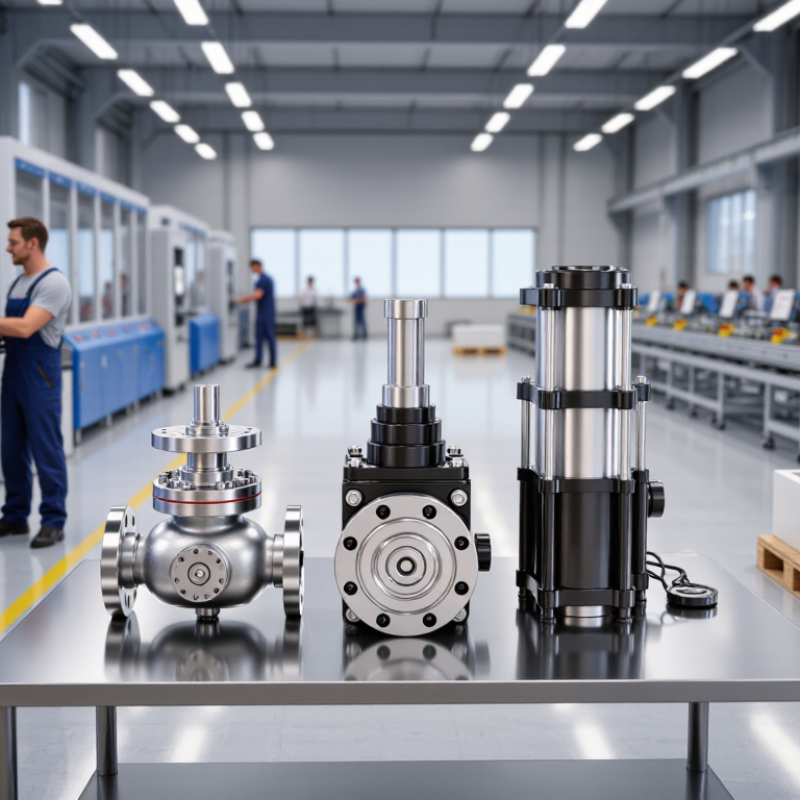
Define Hydraulic Needs: Pressure, Flow, Duty Cycle, and ISO 4413 Safety
How to Find Reliable Hydraulic Manufacturers in 2026?
Before contacting a hydraulic manufacturer, define the machine’s real operating profile. Record working pressure, peak pressure, flow rate, oil temperature, and actuator speed. A pump rated at 250 bar may fail quickly near its maximum. Leave practical headroom. The 2023 NFPA Fluid Power Market Data Book identifies mobile and industrial equipment as major hydraulic application sectors, each requiring different duty assumptions. A lifting system may work intermittently, while a press can repeat heavy cycles all day.
Duty cycle deserves precise measurement. Note start-stop frequency, idle time, shock loads, and daily operating hours. Then ask manufacturers for test data under comparable conditions. ISO 4413 requires hydraulic systems to address risks from pressure, stored energy, unexpected movement, and maintenance access. Request circuit diagrams, pressure-test records, contamination limits, and documented safety procedures. Do not accept “ISO compliant” as a complete answer.
Small details reveal experience. Does the supplier ask about fluid cleanliness and ambient temperature? Can it explain emergency depressurization without vague language? The ISO 4413 safety framework is useful, but it does not replace application-specific risk assessment. The U.S. Bureau of Labor Statistics reported 2.6 million private-industry nonfatal workplace injuries and illnesses in 2023, reminding buyers that equipment reliability and worker safety remain connected. I would also verify traceability, warranty terms, spare-part support, and independent inspection records. A polished catalog is not proof. Mistakes happen, including in my own early evaluations. Recheck every assumption before approval.
How to Find Reliable Hydraulic Manufacturers in 2026? - Define Hydraulic Needs: Pressure, Flow, Duty Cycle, and ISO 4413 Safety
| Evaluation Dimension | What to Define Before Contacting a Manufacturer | Realistic Engineering Data | Reliability Evidence to Request | ISO 4413 Safety Considerations |
|---|---|---|---|---|
| Working Pressure | Specify normal operating pressure, continuous pressure, peak pressure, and the duration and frequency of pressure spikes. | Common industrial hydraulic systems operate around 70–250 bar. High-pressure applications may operate around 250–350 bar. The component rating should exceed the maximum foreseeable system pressure. | Request pressure ratings for pumps, valves, cylinders, manifolds, hoses, and fittings; pressure-test procedures; material specifications; and documented safety factors. | Prevent overpressure with correctly set relief devices. Protect personnel from hose-burst hazards and verify that every pressure-containing component is rated for the intended service. |
| Required Flow | Define actuator speed, simultaneous functions, minimum and maximum flow, and acceptable pressure drop through the circuit. | Small actuators may require less than 10 L/min, while mobile or production machinery can require 50–300 L/min or more. Actual flow depends on cylinder area, motor displacement, and required speed. | Ask for flow-versus-pressure curves, rated flow accuracy, valve response data, efficiency data, and test results at the required temperature range. | Use flow-control devices that prevent unexpected actuator movement. Provide suitable control of stored energy and ensure safe behavior after power loss or restart. |
| Duty Cycle | Record operating hours per day, cycles per hour, load profile, idle periods, start-stop frequency, and whether operation is continuous or intermittent. | A light-duty machine may run 1,000–2,000 hours per year. A production machine can operate 4,000–8,000 hours per year, with repeated pressure cycles throughout each shift. | Request endurance-test conditions, expected service intervals, seal and bearing life assumptions, maintenance instructions, and replacement-part availability. | Assess fatigue, heat generation, noise, vibration, and degradation of protective devices over the complete operating cycle—not only during a short factory test. |
| Load and Motion Profile | Define force or torque, direction of load, acceleration, deceleration, holding time, shock loads, and required positioning accuracy. | Vertical loads require load-holding protection. Rapid deceleration can create transient pressure higher than the normal operating pressure and may require cushioning or counterbalance control. | Request application calculations, dynamic test data, valve response curves, cylinder buckling checks, and confirmation of load-holding performance. | Control unintended movement caused by gravity, trapped pressure, hose failure, or valve leakage. Include suitable blocking, counterbalance, or pilot-operated check arrangements where required. |
| Fluid and Temperature | Specify hydraulic fluid type, viscosity range, contamination sensitivity, ambient temperature, fluid temperature, and exposure to water, dust, or chemicals. | Many mineral-oil systems are designed around ISO VG 32 or ISO VG 46 fluids, but the correct grade depends on temperature, pump design, and manufacturer limits. Excessive fluid temperature accelerates seal and fluid degradation. | Request compatibility charts, operating-temperature limits, filtration recommendations, cleanliness targets, and evidence of leak and seal testing. | Prevent fluid injection, slipping hazards, fire risks, and environmental release. Design access points for safe draining, isolation, and maintenance. |
| Contamination Control | Define the required cleanliness level, filtration location, filter bypass settings, fluid sampling plan, and acceptable particle contamination. | Hydraulic cleanliness is commonly specified using ISO 4406 particle-code reporting. The required code depends on component sensitivity, pressure, and servo or proportional control requirements. | Ask for cleanliness certificates, flushing procedures, filter beta-ratio data, particle-count test reports, and packaging methods that prevent contamination before installation. | Provide safe isolation and depressurization points before filter replacement. Make filters accessible without exposing personnel to uncontrolled pressure or hot fluid. |
| ISO 4413 Conformity | Require a documented hydraulic design review covering risk reduction, component selection, circuit diagrams, operating instructions, and maintenance procedures. | ISO 4413:2010 specifies general rules and safety requirements for hydraulic fluid power systems and their components used on machinery. | Request an ISO 4413 compliance checklist, risk assessment inputs, hydraulic schematics, safety-function descriptions, validation records, and technical documentation in the required language. | Verify safe pressure release, prevention of unexpected movement, protection against hose failure, clear identification of controls, and safe access for inspection and maintenance. |
| Testing and Traceability | Define acceptance tests, permitted leakage, noise limits, temperature rise, response time, dimensional checks, and documentation requirements. | A reliable supplier should be able to link each delivered component or assembly to inspection records, material batches, calibration status, and final test results. | Request inspection plans, calibration certificates, pressure-test records, serial-number traceability, nonconformance procedures, and corrective-action records. | Confirm that safety-related test results are retained and that modifications to the hydraulic circuit trigger a documented review and revalidation where necessary. |
| Service and Lifecycle Support | Define spare-parts demand, response time, training, troubleshooting support, warranty terms, field service coverage, and expected product lifecycle. | Critical machinery should have identified replacement parts, documented maintenance intervals, and a controlled process for obsolete or revised components. | Request parts lists, recommended spare quantities, repair instructions, mean-time-to-repair assumptions, change-notification procedures, and technical support response targets. | Maintenance instructions should cover isolation, lockout, pressure dissipation, accumulator discharge, contamination prevention, and safe verification before returning the machine to service. |
Related Posts
-

5 Best Practices for Choosing Hydraulic Pumps for Your Business
-
2026 Best Hydraulic Gear Pump Options for Global Buyers?
-
How to Choose the Right Hydraulic Valves for Your System?
-
Top 10 Hydraulic Manufacturers from China at the 137th Canton Fair
-

How to Choose the Right Gear Pump for Your Industrial Needs
-
Navigating the Future of Vane Pumps in 2025 Top Technology Trends and How to Adapt Your Supply Chain
