Choosing the right Carbon Steel Coil Supplier can influence production stability, cost control, and delivery performance. Global buyers rarely need the same supplier model. A construction company may prefer a regional stockist, while an automotive manufacturer may require direct mill sourcing. The best choice depends on volume, grade, tolerances, certification, and destination.
Edwin Basson, Director General of worldsteel, has stated, “Steel is the most recycled material in the world.” This perspective matters when buyers evaluate modern steel supply chains. Responsible suppliers should provide clear material certificates, traceable heat numbers, realistic delivery schedules, and evidence of quality management. They should also explain how coils are produced, inspected, stored, and transported. Small details matter. Rust marks matter.
This guide examines ten Carbon Steel Coil Supplier types serving international buyers. The list includes integrated steel mills, electric arc furnace producers, trading companies, service centers, regional distributors, stockholders, processing specialists, online marketplaces, sourcing agents, and project-based suppliers. Each model has practical strengths and possible weaknesses. Direct mills may offer competitive pricing but require larger orders. Traders can provide flexibility but may add another layer of verification. Service centers often support slitting and cut-to-length needs, yet their inventory may be limited.
No supplier category is automatically superior. That would be too simple. Buyers should compare production capability, export experience, payment terms, inspection support, packaging quality, and after-sales communication. A polished website proves little. Samples, documentation, factory evidence, and consistent responses provide stronger signals. Careful comparison can reduce costly surprises, although even experienced buyers sometimes overlook storage conditions or port delays. That is where judgment remains essential.
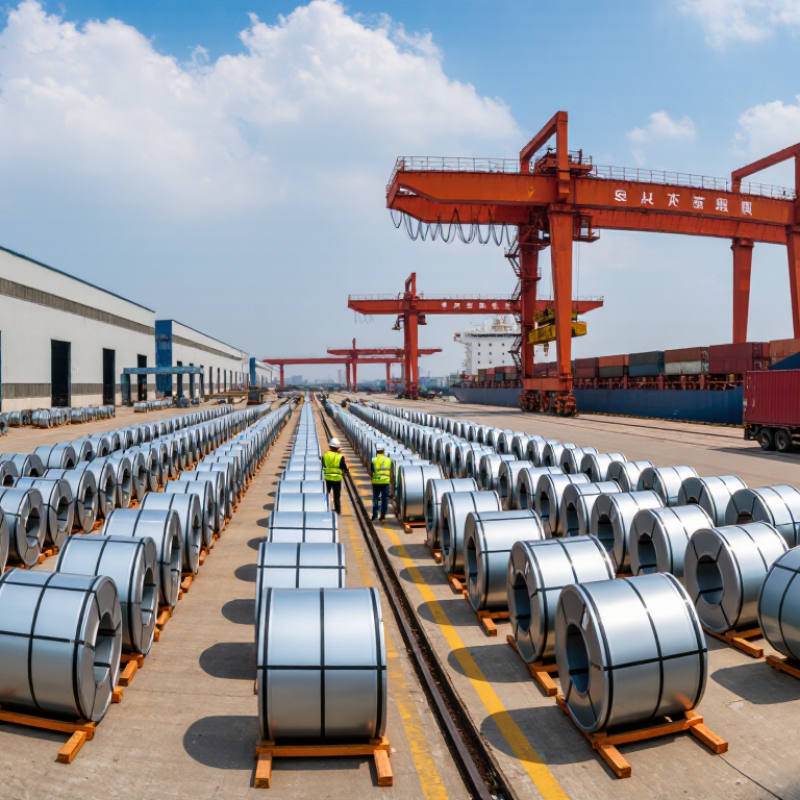
Top 10 Carbon Steel Coil Supplier Types for Global Buyers
Carbon steel coil suppliers vary by production capacity, inventory, and export experience. Integrated mills offer large volumes and consistent chemistry. Re-rolling mills may provide flexible grades and smaller production runs. Steel service centers usually support slitting, leveling, and customized widths. Stockists hold ready material for urgent orders. Trading companies connect buyers with several mills and markets. Processing centers can supply coils with cut-to-length or surface treatment services. Regional exporters often understand local ports and documentation. Online distributors may simplify quotation but require careful verification. Specialty suppliers focus on automotive, construction, or pressure-related specifications. Small fabricators may offer flexibility, yet their testing systems can be limited.
Global buyers should define grade, thickness, width, coil weight, and tolerance before requesting prices. A reliable supplier should provide a mill test certificate, inspection records, packing details, and traceability information. Buyers also need clear terms for delivery, payment, insurance, and port handling. Export experience matters when documents, moisture protection, and loading methods affect arrival quality. In practice, a low price may hide higher inspection or storage costs. I have seen buyers specify strength but overlook flatness. That mistake can delay forming work.
Tips: Request a sample certificate. Confirm the actual producing mill. Ask for recent inspection evidence. Check edge condition and coil dimensions. Compare total landed cost, not only the quoted price. A trial order is useful, but it may not reveal every production risk. Supplier evaluation should remain ongoing.
Integrated steel mills are a major supplier type for global carbon steel coil buyers. They convert raw materials into slabs, hot-rolled coils, and finished products. This controlled route can improve chemistry consistency and traceability across large orders. It also supports customized grades, gauges, and surface requirements. Scale matters here. Yet, scale is not proof of reliability.
Global buyers should examine furnace capacity, rolling tolerances, coil dimensions, and production scheduling. Ask for mill test certificates, heat numbers, inspection procedures, and recent quality records. A credible manufacturer can explain how carbon content, yield strength, and surface condition are controlled. Independent inspection may verify packaging, coil condition, and declared results before shipment. Documents alone are insufficient. In practice, strong offers can weaken when delivery windows are treated as estimates.
Primary coil manufacturers may provide direct technical communication and fewer trading layers. They can respond faster to grade changes, slit-width requests, or recurring volume plans. However, buyers should confirm whether the producer owns the mill or resells externally sourced coils. That distinction affects traceability, claims handling, and supply continuity. Some specifications remain unclear until sample testing begins. A practical evaluation should combine plant capability, contract clarity, testing evidence, and shipment history. The lowest price may indicate efficiency, but it can also reveal missing controls.
Global buyers often compare ten supplier types, but service centers, stockists, and regional distributors handle many practical orders. Their value is operational, not merely commercial.
Service centers buy master coils and process them into narrower widths, cut lengths, or leveled sheets. A buyer may request 1,250 mm coil, 2.0 mm thickness, pickled and oiled, with EN 10204 3.1 certification. This reduces production waste and simplifies receiving. Stockists usually hold common grades locally, allowing faster delivery and smaller minimum quantities. Regional distributors add market knowledge, local transport, and assistance with customs documentation. Useful details matter. Ask for heat numbers, coating condition, inner diameter, coil weight, and actual tolerance records.
The World Steel Association reported 1,888.2 million tonnes of crude steel production in 2023, showing the scale of the supply base. Its World Steel in Figures 2024 also shows strong production concentration across major regions. Buyers should therefore examine inventory depth, not only quoted price.
The OECD’s Steel Market Developments reports continue to highlight excess capacity and changing trade flows, which can affect lead times and offers. Low prices may hide older stock, unclear origins, or inconsistent processing. That assumption can fail. A reliable supplier provides recent mill certificates, traceable batch records, clear Incoterms, and realistic delivery dates.
Still, reports are not perfect; local inventory data can change weekly. Verify before contracting.
Top 10 Carbon Steel Coil Supplier Types for Global Buyers
Export traders, brokers, and digital marketplace suppliers serve different buying needs. Export traders usually consolidate coils from several mills. They can offer mixed specifications, smaller volumes, and coordinated shipping. Brokers connect buyers with mills but may not hold inventory. Their value depends on technical understanding and transparent communication. Digital marketplaces provide fast price comparisons, supplier profiles, and document access. However, a profile is not proof of production capacity.
A reliable buyer checks more than the lowest quotation. Confirm grade, thickness tolerance, coil width, surface condition, and coating requirements. Request recent mill test certificates and packing photographs. Ask who issued each document. Clarify Incoterms, loading ports, payment stages, lead time, and claim procedures. A trader may quote quickly, yet production dates can remain uncertain. Brokers may know the market well, but their commission structure should be clear. Marketplace listings can become outdated. This is where careful judgment matters.
Tips: Compare at least three offers using the same specifications. Call the stated mill or warehouse independently. Check whether certificates match the coil numbers. Start with a manageable trial order when possible. Keep every drawing, email, and inspection record. No channel is perfect. I still treat an attractive offer as provisional until documents, stock, and delivery details align. A short video inspection can reveal loose strapping, wet packaging, or damaged coil edges before shipment.
| Rank | Supplier Type | Primary Inventory or Role | Typical Buyer Profile | Typical Order Size | Typical Lead Time | Common Supply Advantage | Key Verification Documents | Best-Fit Incoterms | Main Commercial Risk |
|---|---|---|---|---|---|---|---|---|---|
| 1 | Integrated Steel Mill Direct Supplier | Hot-rolled, cold-rolled, or galvanized coils produced under controlled mill schedules | Large manufacturers, infrastructure contractors, and long-term industrial buyers | 500–5,000+ metric tons | 4–12 weeks | Consistent production control, traceability, and competitive pricing for volume contracts | Mill test certificate, chemical composition, mechanical test results, inspection certificate, certificate of origin | FOB, CFR, CIF | High minimum order and limited flexibility for small buyers |
| 2 | Specialized Export Trader | Aggregated supply from multiple mills and export-ready carbon steel coil programs | Importers, distributors, and buyers requiring destination-market support | 100–2,000 metric tons | 3–10 weeks | Supplier comparison, export documentation, freight coordination, and flexible sourcing | Mill certificate, packing list, commercial invoice, bill of lading, origin and inspection documents | FOB, CFR, CIF | Margin opacity and possible variation between mills |
| 3 | Independent Steel Broker | Transaction matching between buyers, mills, traders, and stockholders without owning inventory | Experienced buyers with clear specifications and established inspection procedures | 100–1,000+ metric tons | 2–8 weeks | Broad market access and potentially lower intermediary overhead | Seller authorization, mill certificate, inspection report, contract terms, and payment-security records | FOB, CFR, CIF | Limited control over physical stock and counterparty reliability |
| 4 | Regional Steel Stockholder | Coils held in warehouses near major ports or industrial centers for immediate release | Small and medium manufacturers, fabricators, and urgent project buyers | 5–500 metric tons | 2–14 days from available stock | Short delivery time, local collection, and smaller order quantities | Warehouse stock list, coil identification records, mill certificate, weight certificate, inspection report | EXW, FCA, DAP | Higher unit price and possible storage-related surface issues |
| 5 | Steel Service Center | Coils with slitting, cut-to-length, leveling, recoiling, or other processing services | Automotive, appliance, construction, and general fabrication supply chains | 5–300 metric tons | 1–6 weeks | Delivered dimensions, reduced processing workload, and tailored packaging | Mill certificate, processing tolerance report, dimensional inspection record, packing list | EXW, FCA, DAP | Processing charges and tolerance disputes |
| 6 | Digital B2B Marketplace Supplier | Online listings connecting buyers with mills, traders, stockholders, and exporters | Price-sensitive buyers conducting supplier discovery and multi-quote comparisons | 1–1,000+ metric tons | 2–12 weeks | Fast supplier comparison, broad geographic reach, and electronic quotation workflows | Business registration, verified address, mill certificate, third-party inspection, trade references | FCA, FOB, CFR, CIF | Misleading listings, impersonation, and inconsistent product descriptions |
| 7 | Manufacturer-Integrated Distributor | Authorized or contracted distribution supported by production allocation and technical service | OEMs and repeat industrial buyers needing stable specifications and supply programs | 50–2,000 metric tons | 3–10 weeks | Technical support, production allocation, and more consistent after-sales service | Distribution authorization, quality certificate, mill test certificate, audit report, inspection records | FCA, FOB, CFR, CIF | Restricted product range or dependence on one production source |
| 8 | Regional Importer and Distributor | Imported coils cleared through local customs and distributed from domestic inventory | Buyers seeking local currency, domestic delivery, or simplified import procedures | 10–500 metric tons | 2–21 days from local stock | Local compliance knowledge, domestic transport, and reduced customs workload | Import entry, certificate of origin, mill certificate, tax invoice, warehouse records | DAP, DDP, FCA | Local price premium and limited availability of unusual grades |
| 9 | Project Procurement Agent | Sourcing, supplier qualification, inspection coordination, and logistics management for projects | EPC contractors, construction projects, and buyers with complex documentation needs | 100–10,000+ metric tons | 6–20 weeks | Specification management, inspection scheduling, consolidation, and milestone reporting | Approved vendor list, inspection and test plan, mill certificates, progress reports, shipping documents | FCA, FOB, CFR, CIF, DAP | Additional service fees and longer communication chains |
| 10 | Secondary, Excess, or Liquidation Stock Supplier | Prime excess, surplus, downgraded, aged, or non-standard coils offered at discounted prices | Non-critical applications, trial orders, repair work, and highly price-sensitive buyers | 1–500 metric tons | 1–21 days when physically available | Lower purchase cost and access to discontinued or hard-to-source dimensions | Actual coil photos, condition report, available test data, weight certificate, inspection report | EXW, FCA, DAP | Uncertain surface condition, chemistry, dimensional tolerance, and warranty coverage |
| Typical order sizes and lead times are indicative commercial ranges for international carbon steel coil transactions. Actual terms depend on grade, thickness, width, coating, quantity, inspection requirements, production schedule, port congestion, customs procedures, and the agreed Incoterm. Buyers should verify specifications, certification, ownership of goods, sanctions compliance, payment security, and independent inspection before shipment. | |||||||||
Global buyers usually choose among ten carbon steel coil supplier types: integrated mills, electric-arc-furnace mills, rerollers, service centers, stockists, exporters, traders, toll processors, project distributors, and online marketplaces. Their differences become clear in three areas: quality, cost, and reliability. Integrated mills often provide stable chemistry and strong traceability, but minimum orders can be high. EAF mills may offer flexible grades and lower transport emissions, although scrap quality can affect consistency. Rerollers and toll processors can reduce costs, yet buyers must inspect incoming material and process controls. Service centers and stockists deliver quickly from local inventories. That speed costs more.
The World Steel Association reported approximately 1.89 billion tonnes of crude steel production in 2023, showing the market’s enormous scale. However, volume does not guarantee dependable coils. The OECD warned that global steel overcapacity could approach 630 million tonnes by 2026. Excess supply may create attractive prices, but it can also increase documentation and quality risks. Traders and online marketplaces often compare many offers quickly. Reliability depends heavily on verified mill certificates, chemical analysis, coil weight records, and claims history. For demanding applications, request EN 10204 3.1 inspection documents, third-party testing, and a traceable heat number. Project distributors are useful when delivery coordination matters. They may not be the cheapest option. In practice, the lowest quote sometimes hides weaker packaging, longer transit exposure, or uncertain coating performance. A careful buyer should score each supplier type against actual thickness tolerance, delivery distance, payment terms, and inspection access. The ranking is not absolute. Human judgment still matters.
Hi! Simply click below and type your query.
Our experts will reply you very soon.
