China Top Galvalume Corrugated Sheet Suppliers

China has become a major sourcing base for Galvalume Corrugated Sheet, serving roofing, wall cladding, agricultural buildings, and industrial projects worldwide. Its manufacturers compete through coating consistency, production capacity, export experience, and responsive technical support. However, a polished website does not always prove dependable performance. Buyers need stronger evidence.

This guide introduces leading Chinese suppliers and examines the details that influence a practical purchasing decision. These details include substrate thickness, AZ coating levels, profile accuracy, paint durability, and dimensional tolerance. Reliable suppliers should provide mill certificates, inspection records, product samples, and clear warranty terms. Factory audits can also reveal coil storage conditions, roll-forming equipment, and packaging quality. A scratched sheet inside a damp container may fail before installation, even when its test report looks excellent.

Supplier comparisons should also consider minimum order quantities, production schedules, loading methods, and after-sales communication. Experienced exporters usually understand container limits, local roofing standards, and documentation requirements. Still, no supplier list remains perfect forever. Capacity changes, raw material prices fluctuate, and quality can vary between batches. That is why independent testing and sample approval remain valuable.

The best choice is not always the lowest quotation. It is the supplier that consistently delivers suitable Galvalume Corrugated Sheet for the project’s climate, design, and budget. This introduction provides a careful starting point for evaluating China’s top manufacturers with greater confidence and fewer costly surprises.
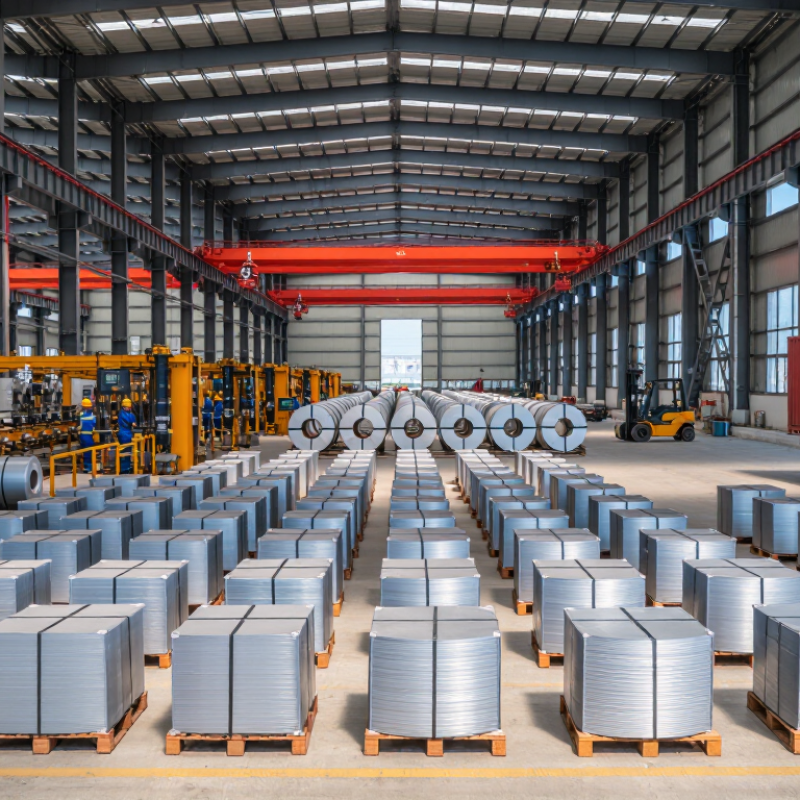
China Top Galvalume Corrugated Sheet Suppliers

Galvalume Corrugated Sheets: Composition, Properties, and Applications

Galvalume corrugated sheets use a steel core coated with an aluminum-zinc-silicon alloy. A common coating contains about 55% aluminum, 43% zinc, and 1.6% silicon. The aluminum forms a protective barrier, while zinc helps protect exposed cut areas. Corrugation adds stiffness without greatly increasing sheet weight.

These sheets resist heat, moisture, and atmospheric corrosion better than ordinary galvanized steel in many environments. Their bright surface can reflect part of the sun’s radiation, helping reduce roof heat. However, performance depends on coating thickness, forming quality, fasteners, and installation details. No sheet is maintenance-free. That assumption is too simple. Cut edges, scratches, and trapped water can still cause premature rust.

Applications include residential roofing, wall cladding, warehouses, workshops, farm buildings, and temporary structures. In coastal or industrial areas, buyers should check the coating class and request test documents before ordering. Reliable suppliers normally provide steel grade, coating mass, thickness tolerance, yield strength, and dimensional inspection records. Sample checks should include rib height, pitch, surface uniformity, and hole alignment. During field inspections, loose fasteners and poorly overlapped panels often create leaks before the sheet itself fails. Galvalume should also be separated from incompatible materials, especially in persistent wet conditions. This detail is easy to overlook. Suppliers who explain these limits clearly are more dependable than those offering only attractive price quotations.

Key Factors for Evaluating Chinese Galvalume Sheet Suppliers

China Top Galvalume Corrugated Sheet Suppliers

When evaluating Chinese galvalume sheet suppliers, begin with production evidence, not attractive quotations. Ask for recent mill certificates, coating mass records, and dimensional inspection reports. A dependable supplier should identify the steel grade, yield strength, coating composition, and corrugation profile clearly. Vague specifications create problems later.

Request a factory video or conduct an independent audit when order value justifies it. Check coil storage, slitting equipment, roll-forming lines, and packaging methods. Look for dry warehouses and edge protection on bundled sheets. Small dents often begin during loading, not production. Ask how the supplier controls coating thickness across the coil width. Test samples through an independent laboratory when surface durability matters. Factory reports are useful, but they should not be the only evidence.

Traceability deserves careful attention. Each bundle should connect to a coil number, production date, inspection record, and packing list. Confirm the supplier’s experience with similar roof profiles and export destinations. References can reveal response speed, claim handling, and replacement practices. A low price may reflect thinner steel or weaker packaging. It may not be a bargain. No supplier is flawless, and my evaluation would still leave room for uncertainty. Seasonal capacity, subcontracted forming, and inconsistent sample quality need direct questions before payment terms are accepted.

Manufacturing Standards and Quality Control in China

China’s galvalume corrugated sheet sector benefits from a large, established steel manufacturing base. The World Steel Association reported China’s crude steel output at about 1.005 billion tonnes in 2024. This scale supports stable coil supply, but volume alone does not prove quality. Reliable suppliers should follow GB/T 12754, ASTM A792/A792M, or EN 10346 requirements, depending on the destination market.

Manufacturing control begins with the substrate. Plants should record steel grade, thickness, yield strength, and surface condition before coating. A typical galvalume layer contains approximately 55% aluminum, 43.4% zinc, and 1.6% silicon. Coating mass, often specified as AZ150, requires documented testing rather than visual approval. Inspectors commonly use magnetic gauges, coating-weight tests, bend tests, and tensile tests. Each coil should carry traceable heat numbers, production dates, and inspection records. Small details matter, especially at cut edges and corrugation shoulders.

Packaging also reveals practical experience. Sheets need dry separators, firm strapping, and ventilation during inland transport. Moisture trapped between stacked sheets can create storage stains before installation. A certificate is useful, but it is not proof by itself. Independent sampling can expose uneven coating, inconsistent thickness, or poor forming behavior. No factory is flawless, and even experienced buyers should review rejected samples. The International Organization for Standardization emphasizes documented quality systems, yet paperwork can still miss handling mistakes on the production floor. On-site audits remain valuable when orders involve strict tolerances or long service expectations.

Product Specifications, Customization, and Certification Options

China Top Galvalume Corrugated Sheet Suppliers

Reliable suppliers provide clear product specifications before quoting. Common options include AZ50 to AZ150 coatings, 0.20 to 1.20 millimeter thicknesses, and widths near 900 to 1250 millimeters. Corrugation profiles may include 760, 830, or effective cover widths. Please verify these measurements carefully. Effective width can differ from total width.

Customization often covers sheet length, rib height, surface treatment, packaging, and color coating. Standard lengths suit warehouses and farm buildings. Cut-to-length service reduces onsite waste. However, unusual profiles may require new tooling and higher minimum quantities. A practical supplier should confirm tolerances, coil origin, edge condition, and loading limits in writing. Small details matter.

Certification options should match the project and destination market. Buyers can request mill test certificates, coating-weight reports, dimensional inspection records, and chemical composition data. Compliance may reference ASTM, EN, JIS, or other agreed standards. Third-party inspection is useful for large orders. ISO 9001 quality systems can support process consistency, but they do not replace product testing. Ask for recent sample reports. Some documents look complete but lack traceable batch numbers. That deserves a second review. Experienced purchasing teams also compare salt-spray results, bending performance, and packaging strength. Galvalume sheets can perform well in demanding environments, yet poor storage may cause white rust. Dry ventilation and separated bundles remain essential.

China Top Galvalume Corrugated Sheet Suppliers - Product Specifications, Customization, and Certification Options
Data Dimension Typical Product or Service Option Common Technical Details Customization Availability Relevant Standard or Certification Reference
Base Metal Cold-rolled steel substrate Commercial-quality or structural-quality steel selected according to forming and load requirements. Available by specified yield strength, tensile strength, and elongation requirements. ASTM A792/A792M; EN 10346; JIS G3321
Coating Type Aluminium-zinc alloy coating Common coating composition is approximately 55% aluminium, 43.4% zinc, and 1.6% silicon by weight, subject to the applicable standard. Coating mass can be selected for the intended environment and service life. ASTM A792/A792M; EN 10346; JIS G3321
Coating Mass AZ100, AZ150, or equivalent designations Typical total coating masses are 100 g/m² or 150 g/m², including both sides; the exact designation depends on the governing standard. Other coating masses may be available subject to production capability and order quantity. ASTM A792/A792M and EN 10346 coating-mass requirements
Nominal Thickness Light- to medium-gauge roofing sheet Common commercial ranges are approximately 0.20–1.20 mm, with actual availability depending on profile and structural requirements. Thickness tolerance, minimum base-metal thickness, and ordering basis can be specified. Applicable dimensional-tolerance requirements under ASTM, EN, or JIS standards
Effective Width Profile-dependent coverage width Frequently produced in effective widths of approximately 750–1,100 mm, depending on roll-forming profile. Custom effective width and overlap configuration may be developed for project requirements. Supplier profile drawings and project-approved shop drawings
Sheet Length Cut-to-length roofing panels Typical lengths range from approximately 1,800–12,000 mm; transport and installation conditions should be considered. Length can normally be ordered to project dimensions, subject to transport and manufacturing limits. Purchase-order dimensional tolerances and approved packing specifications
Corrugation Profile Trapezoidal, sinusoidal, or other roll-formed profiles Profile depth and pitch influence stiffness, drainage capacity, overlap, and appearance. Profile geometry, pitch, height, overlap, and cut-back details can be selected from available tooling. Project structural drawings; regional roofing and cladding requirements
Surface Finish Regular spangle, minimized spangle, or smooth finish Galvalume surfaces may show a characteristic metallic spangle; appearance can vary with production conditions. Surface appearance, passivation, oiling, and protective-film requirements may be specified. Product specification and approved appearance samples
Color Options Natural metallic finish or pre-painted finish Natural galvalume is metallic silver. Pre-painted versions use a compatible coating system and defined color reference. Color, gloss level, paint system, back-coat requirements, and protective film can be customized. ASTM A755/A755M for metallic-coated steel sheet with factory-applied organic coatings
Paint System Polyester, SMP, or PVDF coating systems Coating selection depends on UV exposure, corrosion conditions, forming requirements, and expected service environment. Top-coat, primer, back-coat, dry-film thickness, and color can be specified by project. ASTM A755/A755M; EN 10169 for continuously organic-coated steel products
Mechanical Properties Commercial or structural grades Grade selection may include specified yield strength, tensile strength, and elongation for forming or load-bearing applications. Mechanical-property targets can be aligned with the selected ASTM, EN, or JIS grade. ASTM A792/A792M; EN 10346; JIS G3321
Corrosion Performance Atmospheric corrosion-resistant metallic coating Aluminium-zinc coating generally provides strong atmospheric corrosion resistance, but performance varies with humidity, pollutants, salt exposure, cutting, and design. Coating mass, paint system, edge protection, and installation details can be selected for the exposure category. ISO 12944 environmental-corrosivity framework; EN 10346 coating requirements
Fabrication Services Roll forming and cut-to-length processing Standard processing may include profiling, shearing, bundling, labeling, and protective packing. Pre-cut lengths, holes, notches, special edges, and accessory coordination may be available after drawing review. Approved production drawings and inspection plans
Accessories Flashing, ridge caps, gutters, screws, and closure strips Accessories should be compatible with the sheet profile, coating system, fastener material, and expected environment. Dimensions, material, color, hole pattern, and packaging can be coordinated with the roofing system. Project specifications and applicable fastener or roofing-system requirements
Quality Documents Mill test certificate and inspection records Typical documentation may include heat number, thickness, coating mass, mechanical properties, dimensions, and visual inspection results. Third-party inspection, sampling plans, photographs, and shipment documentation may be arranged by contract. EN 10204 Type 3.1 inspection certificate; agreed quality-control plan
Testing Options Dimensional, coating, mechanical, and appearance testing Possible checks include thickness, width, length, coating mass, tensile properties, bend performance, color, and gloss for pre-painted products. Test frequency, laboratory involvement, acceptance criteria, and reporting format can be agreed before production. ASTM, EN, JIS, ISO, or contract-specific test methods
Packaging Export seaworthy or domestic transport packing Common practices include metal or plastic strapping, waterproof wrapping, edge protection, pallets or skids, and lifting marks. Package weight, coil or sheet orientation, container loading, labels, and moisture protection can be specified. Purchase-order packing instructions and transport requirements
Certification Options Material conformity and management-system documentation Documentation may include product conformity certificates, inspection certificates, environmental declarations, and quality-management records where applicable. Required certificates should be identified in the inquiry because availability depends on product grade, destination, and contract terms. ISO 9001 quality management; ISO 14001 environmental management; EN 10204 documentation
Recommended Inquiry Data Project-specific technical specification Include standard, base-metal grade, coating designation, thickness, profile, effective width, length, color, quantity, and destination. Adding drawings, loading requirements, exposure conditions, inspection criteria, and packaging instructions improves quotation accuracy. Buyer specification, approved drawings, and applicable national building requirements

How to Select a Reliable Chinese Galvalume Sheet Supplier

China Top Galvalume Corrugated Sheet Suppliers

Selecting a reliable Chinese galvalume sheet supplier requires more than comparing prices. Check the coating grade, base steel thickness, yield strength, and corrugation profile. Ask for recent mill test certificates and independent inspection records. A dependable supplier should explain AZ coating weight clearly, not hide it behind vague terms. Request samples before placing a large order. Measure thickness at several points, because small variations can affect installation and service life. I once focused too heavily on a low quotation. The packaging was weak, and several sheet edges arrived scratched. That mistake changed my supplier evaluation process.

Tips: Visit the factory, physically or through a live video call. Inspect the coating line, forming machines, warehouse conditions, and loading practices. Confirm whether production is handled in-house or outsourced. Ask for photographs from recent shipments, not only showroom images. Verify export experience, inspection procedures, payment terms, and realistic lead times. Clear answers matter.

Reliable suppliers also provide consistent communication after the order. They should confirm dimensions, color, bundle weight, protective film, and container loading details in writing. Compare at least three quotations, but do not select the cheapest offer automatically. A supplier with strong technical knowledge may identify an unsuitable profile or coating for your environment. That advice shows expertise. Still, do not accept every claim without evidence. Request traceable documents, review them carefully, and keep approved samples for future quality checks.


Close

Raise your Query

Hi! Simply click below and type your query.

Our experts will reply you very soon.

WhatsApp Us
