Best China Hydraulic Vane Pump Manufacturers Guide

Choosing the right Hydraulic Vane Pump manufacturer in China requires more than comparing catalog prices. Buyers must examine engineering depth, production consistency, testing practices, and after-sales support. A polished website is useful, but it proves very little.

This guide introduces practical methods for evaluating leading Chinese manufacturers. It considers pump displacement, operating pressure, speed range, fluid compatibility, noise control, and expected service life. These details matter when a pump runs continuously beside a molding machine or mobile hydraulic system. Experienced buyers should request drawings, material information, performance curves, and test records before approving a supplier. Factory audits can reveal important details, including assembly cleanliness, calibration routines, spare-part storage, and technician training.

Look beyond the quotation.

Reliable manufacturers normally explain their tolerances clearly. They also discuss application limits instead of promising universal performance. That honesty is valuable. However, no supplier ranking is perfect. Market information changes, product lines evolve, and some claims remain difficult to verify without direct testing. Buyers should therefore compare samples under realistic working conditions. Check pressure stability, leakage, temperature rise, vibration, and sound levels. A pump that performs well for ten minutes may disappoint after weeks of operation.

The following sections assess manufacturer capabilities, customization options, quality systems, certifications, delivery reliability, and technical communication. They also highlight questions that can expose hidden costs or unsuitable designs. With documented evidence and careful technical review, companies can reduce selection risks and build stronger long-term partnerships. The best choice is not always the cheapest factory. It is the manufacturer that consistently matches proven performance with dependable support.
Best China Hydraulic Vane Pump Manufacturers Guide

What Is a Hydraulic Vane Pump and How Does It Work?

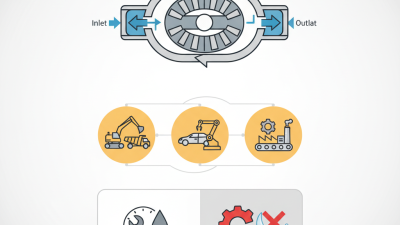
A hydraulic vane pump converts shaft rotation into controlled fluid flow. Inside the housing, a rotor turns inside a cam ring. Sliding vanes move through rotor slots and stay against the ring through centrifugal force and pressure. As the chambers expand, they draw hydraulic oil through the inlet. As the chambers shrink, they push oil toward the outlet.

That is the basic cycle.

Flow depends on displacement and rotational speed. Pressure develops when the downstream circuit resists flow, not because the pump creates pressure alone. Fixed-displacement vane pumps deliver nearly constant volume per revolution. Variable-displacement designs adjust output through a movable control ring. This can reduce heat and energy waste, especially in injection equipment, machine tools, and mobile machinery. MarketsandMarkets’ 2024 hydraulic pumps market assessment identifies industrial and mobile equipment as major demand segments. Fortune Business Insights also reported continued market growth, supported by automation and construction equipment investment.

In field service, clean oil matters more than many buyers expect. A dirty filter can score the cam ring, while excessive shaft misalignment can damage bearings. A technician should check inlet vacuum, oil temperature, noise, and flow under load. Vane pumps are often quiet, but quiet does not mean healthy. Some specifications appear acceptable while internal leakage is already rising. That is where selection guides can mislead. ISO 4406 cleanliness ratings and the pump maker’s test conditions must be compared carefully, because laboratory performance may not match a dusty worksite.

Key Features of China’s Hydraulic Vane Pump Manufacturing Industry

Best China Hydraulic Vane Pump Manufacturers Guide

China’s hydraulic vane pump industry benefits from a dense manufacturing supply chain. Motor housings, shafts, seals, and precision springs can often be sourced locally. MarketsandMarkets estimates that the global hydraulic pumps market will grow from about USD 10.5 billion in 2023 to USD 14.0 billion by 2028. This demand encourages Chinese factories to improve machining accuracy and production speed.

Key features include CNC machining, automated assembly, and pressure testing at different operating conditions. Many established plants inspect rotor slots, vane clearance, and surface hardness before final assembly. Clean oil matters. ISO 4406 contamination checks can reveal particles that shorten pump life. However, testing methods still vary between suppliers. Buyers should request test curves, noise readings, material certificates, and traceable inspection records.

Customization is another strong feature. Manufacturers commonly adjust displacement, port dimensions, shaft designs, and mounting patterns for mobile equipment or industrial systems. The China Hydraulic Pneumatic and Seals Association has reported continued expansion in China’s fluid-power sector, supported by construction machinery and factory automation. Yet lower pricing can hide thinner testing or inconsistent sealing materials. A factory visit, sample teardown, and repeat endurance test provide stronger evidence than a polished catalog. Reliability is earned under heat, dust, and pressure.

Best China Hydraulic Vane Pump Manufacturers Guide: Key Industry Features

China’s hydraulic vane pump manufacturing industry commonly covers a broad range of displacement and pressure requirements. The chart shows representative rated-pressure ranges compiled from publicly available technical specifications for general industrial vane pump designs. Actual ratings vary by model, fluid, speed, and operating conditions.

Larger-displacement vane pumps are typically designed for medium-pressure industrial applications, while compact models may support higher operating speeds and specialized pressure ratings. Key evaluation factors include volumetric efficiency, noise level, contamination tolerance, pressure stability, and customization capability.

How to Evaluate the Best China Hydraulic Vane Pump Manufacturers

How to Evaluate the Best China Hydraulic Vane Pump Manufacturers

Evaluating China hydraulic vane pump manufacturers requires more than comparing prices. Start with verified production experience, engineering capability, and stable quality records. Ask how long the factory has produced vane pumps. Request samples from the same production line used for regular orders. A polished website is not proof.

Review technical documents carefully. Check displacement range, rated pressure, speed limits, materials, and allowable fluid temperature. Reliable manufacturers provide performance curves, inspection records, and batch traceability. Test reports should show actual data, not only standard promises. During a factory audit, inspect machining equipment, cleanliness, assembly areas, and seal storage. Small details matter. Dust near assembly benches can become a costly failure later.

Communication also reveals professional strength. Engineers should explain pressure loss, cavitation risks, noise control, and compatibility with your hydraulic system. Request a sample test under realistic load conditions. Measure flow, temperature rise, vibration, and sound after continuous operation. Certification can support credibility, but it does not replace independent testing. No supplier is perfect. Even experienced factories may have delayed feedback or inconsistent documentation. Record these weaknesses and judge their response. A dependable partner accepts technical questions, corrects errors, and offers clear warranty procedures. Check spare-parts availability, packaging quality, delivery controls, and after-sales support before signing an agreement. The best choice balances evidence, practical testing, and transparent cooperation.

Leading Manufacturer Categories and Their Product Strengths

Best China Hydraulic Vane Pump Manufacturers Guide

China’s hydraulic vane pump manufacturers generally fall into three practical categories. Large industrial producers focus on stable series production, broad displacement ranges, and automated testing. Their strength is consistency. They often provide pumps for injection molding, machine tools, mobile equipment, and factory automation. Buyers should inspect pressure records, noise data, and batch traceability rather than rely on catalog claims.

Engineering-led manufacturers serve customers with unusual flow, mounting, or control requirements. They can adjust port positions, shaft designs, seal materials, and cartridge configurations. This category is useful when a standard pump causes vibration or fails to fit an existing power unit. Product strength comes from application testing, not only machining capacity. Ask for test curves at actual oil viscosity and operating temperature.

Specialized component manufacturers usually concentrate on cartridges, replacement pumps, or compact low-noise units. Their advantages include faster customization, flexible minimum orders, and easier maintenance access. Some offer hardened shaft surfaces and balanced rotor assemblies for longer service life. However, customization can hide weaknesses. A polished sample may not represent continuous production quality. Request inspection reports, endurance results, material certificates, and clear warranty terms. Leave room for doubt. Even experienced buyers can overlook contamination control, which often decides a pump’s real service life.

How to Select, Verify, and Purchase the Right Vane Pump Supplier

Best China Hydraulic Vane Pump Manufacturers Guide

Selecting a China hydraulic vane pump supplier requires more than comparing quotations. MarketsandMarkets projects the hydraulic pumps market to grow from USD 10.1 billion in 2023 to USD 13.7 billion by 2028. This growth increases supplier choices, but also makes verification essential. Define displacement, rated pressure, operating speed, fluid viscosity, temperature, and expected service hours before contacting manufacturers. Ask for performance curves, material specifications, dimensional drawings, and recent test records. A serious supplier should explain its testing process clearly.

Inspect the factory, or use an independent auditor. Check machining capacity, assembly controls, calibration records, and component traceability. Request ISO 9001 certification, but verify its certificate number with the issuing body. Certification alone proves little. For hydraulic cleanliness, require oil-sample results using ISO 4406 codes, especially for high-pressure equipment. Ask for a pre-shipment test at your actual pressure and speed. Confirm warranty terms, spare-parts availability, packaging, delivery dates, and response times in writing. A sample order can expose problems before a production contract. It may also reveal inconsistent noise or leakage. No checklist is perfect. I would still compare at least two test reports, because one document can be incomplete or poorly interpreted. The final purchase should follow measured performance, transparent communication, and lifecycle cost rather than the lowest initial price.

Best China Hydraulic Vane Pump Manufacturers Guide - How to Select, Verify, and Purchase the Right Vane Pump Supplier

Evaluation Dimension What to Verify Practical Reference Data Required Evidence Purchasing Recommendation
Application Matching Confirm the pump design is suitable for the machine duty cycle, hydraulic circuit, fluid type, and installation environment. Vane pumps are commonly used for industrial machinery, mobile equipment, injection machinery, presses, and power units where low noise and stable flow are important. Completed application questionnaire, circuit diagram, operating profile, and fluid specification. Reject suppliers that recommend a model without reviewing pressure, speed, temperature, viscosity, and duty-cycle data.
Displacement and Flow Check geometric displacement, rated speed, theoretical flow, and actual flow at the intended operating pressure. Theoretical flow is approximately calculated as: Q = displacement × speed. Actual flow is lower because of volumetric losses. Official performance curve showing flow against speed and pressure. Select a pump with adequate flow margin rather than sizing only from the no-load catalog value.
Pressure Capability Separate continuous operating pressure, intermittent pressure, and maximum allowable pressure. Many industrial vane pump ranges operate within approximately 70–210 bar; higher ratings are model-specific and must be confirmed from the technical data sheet. Pressure rating, pressure-cycle test results, and a clearly defined warranty limit. Do not treat short-term peak pressure as a continuous operating rating.
Speed Range Verify minimum starting speed, continuous speed, maximum speed, and permissible acceleration. A typical industrial operating window may be around 600–1,800 rpm, but the allowable range depends on displacement, pressure, inlet conditions, and pump construction. Speed-versus-pressure chart and recommended drive details. Confirm compatibility with the electric motor, engine, gearbox, or variable-speed drive.
Volumetric Efficiency Evaluate leakage-related flow loss at rated pressure, rated speed, and specified oil viscosity. Efficiency changes with pressure, speed, temperature, viscosity, internal clearances, and component wear; one unloaded efficiency value is not sufficient. Factory test report including pressure, speed, oil temperature, viscosity, inlet pressure, and measured flow. Compare suppliers using identical test conditions and the same acceptance criteria.
Mechanical and Overall Efficiency Check input torque, power consumption, heat generation, and efficiency at the actual duty point. Hydraulic output power can be estimated from pressure and flow; total efficiency also includes mechanical and volumetric losses. Performance map or test data covering at least the intended operating point. Use efficiency data to estimate energy cost and cooling-system requirements.
Noise and Vibration Confirm noise test conditions, mounting arrangement, rotational speed, pressure, and inlet piping design. Vane pumps are often selected for lower noise than many external gear pump designs, but actual noise depends heavily on speed, aeration, mounting, and piping. Sound-pressure test method, measured dB(A) value, vibration data, and test configuration. Require a sample test when the pump will be installed near operators or in a noise-sensitive environment.
Fluid Compatibility Verify compatibility with mineral oil, fire-resistant fluid, biodegradable fluid, seals, coatings, and internal materials. Mineral hydraulic oil is commonly used; water-glycol, phosphate-ester, and biodegradable fluids may require special materials and reduced ratings. Approved-fluid list, seal material, viscosity range, temperature range, and restrictions. Obtain written approval before using a fluid outside the supplier’s standard mineral-oil specification.
Cleanliness and Filtration Check the recommended filtration level, contamination sensitivity, flushing procedure, and cleanliness of the delivered pump. ISO 4406 is widely used to report hydraulic-fluid particle contamination using a three-number cleanliness code. Cleanliness certificate, filter recommendation, flushing instructions, and contamination-control procedure. Make the target cleanliness code and filtration specification part of the purchase order.
Inlet Conditions and Cavitation Protection Verify inlet pressure, suction-line diameter, oil temperature, viscosity, line length, and restrictions. Excessive inlet restriction, high viscosity, aeration, or insufficient filling can cause noise, wear, loss of flow, and cavitation damage. Inlet-pressure limits, installation drawing, suction-line recommendations, and start-up procedure. Use the supplier’s inlet-pressure limits as a mandatory design input, not as an optional guideline.
Materials and Manufacturing Control Review housing material, rotor, vane, ring, shaft, bearing, coating, heat treatment, and dimensional-control processes. Critical wear surfaces require controlled hardness, surface finish, clearances, and dimensional consistency. Material certificates, process-control plan, inspection records, and traceability documents. Prioritize suppliers that can trace critical components by batch or serial number.
Dimensional and Interface Compatibility Confirm mounting flange, shaft, rotation direction, port size, port thread, pilot diameter, and overall envelope. Common hydraulic interfaces may use metric, BSPP, or SAE-based connections, depending on the selected configuration and market. Dimensioned drawing, 3D CAD file, shaft drawing, port details, and rotation marking. Approve the drawing before production and inspect the first article against the approved revision.
Quality Management Assess whether the production site has documented quality procedures and controlled inspection points. ISO 9001 certification indicates a quality-management system; it does not by itself prove pump performance or product conformity. Valid certificate, certification scope, audit date, inspection plan, and nonconformance records. Verify the certificate directly with the issuing certification body when the order value or risk is significant.
Factory and Product Verification Confirm that the supplier can perform pressure, flow, leakage, noise, vibration, and endurance testing. A meaningful test record identifies the exact pump, test fluid, temperature, speed, pressure, flow, and acceptance limits. Sample factory test report, calibrated instrument list, test-bench photographs or video, and serial-number traceability. Use a pre-shipment inspection or witnessed test for high-pressure, safety-critical, or high-volume purchases.
Prototype and Sample Evaluation Test a sample under the same pressure, speed, temperature, viscosity, and mounting conditions expected in production. A sample should demonstrate stable flow, acceptable noise, no external leakage, correct rotation, and repeatable performance. Approved sample report, test data, dimensional inspection, and corrective-action record if deviations occur. Do not approve mass production solely from photographs or a catalog specification.
Warranty and After-Sales Support Review warranty duration, exclusions, response time, spare-parts availability, repair capability, and technical communication. Warranty coverage commonly depends on correct installation, fluid cleanliness, operating limits, and documented maintenance. Written warranty terms, troubleshooting guide, spare-parts list, service procedure, and escalation contact. Include response time, replacement responsibility, and failure-analysis requirements in the supply agreement.
Lead Time and Production Capacity Check standard lead time, production capacity, critical-component availability, and peak-season risks. Actual lead time varies according to configuration, customization, quantity, testing requirements, and export documentation. Capacity statement, production schedule, confirmed delivery plan, and contingency arrangement. Use staged deliveries or safety stock when production downtime would be costly.
Commercial and Total Cost Compare unit price, tooling, testing, packaging, freight, duties, spare parts, maintenance, and energy consumption. The lowest purchase price may not provide the lowest lifecycle cost if efficiency, service life, delivery reliability, or spare-parts support is weak. Itemized quotation, Incoterms, payment terms, tooling ownership, warranty cost, and spare-parts pricing. Evaluate total cost of ownership rather than comparing unit prices alone.
Screening Note: The pressure, speed, and application ranges shown above are general industry reference values, not universal ratings. Final selection must be based on the exact pump model documentation, verified test conditions, hydraulic-fluid requirements, and approved installation drawings.

Close

Raise your Query

Hi! Simply click below and type your query.

Our experts will reply you very soon.

WhatsApp Us