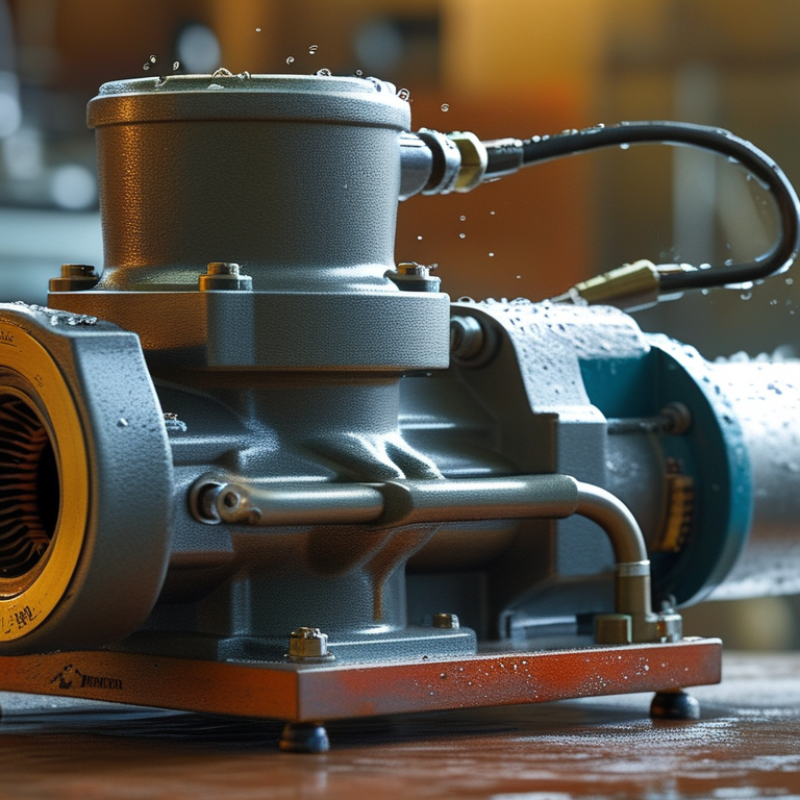
A Value Vacuum Pump is a practical tool for removing air, moisture, and non-condensable gases from sealed systems. It is widely used in refrigeration, air-conditioning, automotive service, and laboratory work. Its purpose sounds simple, but reliable evacuation requires more than connecting a hose and switching it on. Pump size, oil condition, hose diameter, leakage, and system temperature can all change the final result.
Vacuum-technology author John F. O’Hanlon explains the basic challenge clearly: “A vacuum is not empty space; it is a gas-handling problem.” A Value Vacuum Pump usually uses an oil-sealed rotary-vane mechanism. As the rotor turns, the vanes capture gas from the inlet, compress it, and release it through the exhaust port. Fresh pump oil helps seal internal clearances and carries away heat. The process repeats until pressure falls to the pump’s working limit.
In practice, the lowest advertised micron rating does not guarantee a fast evacuation. A narrow charging hose may restrict performance. Damp oil may also hide a deeper problem. A micron gauge near the system gives more trustworthy evidence than the pump’s sound or vibration. That detail matters.
This guide will examine how a Value Vacuum Pump works, what its main components do, and how technicians can use it responsibly. Some explanations may appear basic. They are still worth checking, because small mistakes often create large service delays. A careful technician watches the readings, inspects connections, and questions results that seem unusually perfect.
What Is a Value Vacuum Pump and How Does It Work?
Definition and Purpose of a Value Vacuum Pump
The term “value vacuum pump” can be confusing. In practice, it often describes a vacuum pump used with valve-controlled equipment. Its purpose is to remove air, moisture, or other gases from a sealed system. This creates lower pressure inside the chamber or line.
The pump uses a motor to drive an internal mechanism, such as rotary vanes or a diaphragm. As the mechanism moves, it captures gas and pushes it toward the exhaust port. A valve controls the flow and helps prevent unwanted air from returning. Technicians may use this setup during refrigeration service, laboratory preparation, packaging, or industrial maintenance. The correct pump depends on vacuum depth, gas type, flow rate, and system size. One detail is easy to miss: a strong pump cannot compensate for a leaking connection.
Tips
Check every hose, gasket, and valve before starting. Small leaks matter. Use a vacuum gauge near the equipment, not only near the pump. This gives a more realistic reading. Change contaminated oil when the model requires it. Moisture can reduce performance and damage internal parts. I have found that rushing the final leak check causes avoidable errors. Let the pump run steadily, and watch whether the pressure continues to fall. If it stops too early, inspect the system before blaming the pump. Safety glasses and proper ventilation remain sensible precautions.
What Is a Value Vacuum Pump and How Does It Work?
A value vacuum pump removes air and other gases from a sealed chamber. It creates lower pressure for laboratory, packaging, cooling, and maintenance tasks. The pump begins when an electric motor turns its internal rotor. This rotating motion moves trapped gas toward the exhaust outlet. Pressure differences do the real work. It sounds simple, but small leaks can weaken performance quickly.
Main Components and Their Functions
The motor supplies steady mechanical power to the pumping mechanism. Inside, a rotor, vanes, or pistons capture gas and compress it. The inlet port connects to the vacuum chamber through a hose or fitting. A clean, properly sized hose improves airflow and reduces pressure loss. The exhaust port releases compressed gas from the pump body.
Seals prevent unwanted air from entering around shafts and covers. A check valve helps stop backflow when the pump stops. In oil-sealed models, oil lubricates moving parts and helps close tiny internal gaps. It also carries heat away, although contaminated oil can reduce vacuum quality. A pressure gauge shows operating conditions, but it may not reveal every leak. I have found that fittings deserve careful inspection; they often cause trouble before the pump itself does. The motor may run normally while the chamber remains above its target pressure. That detail is easy to miss. Regular oil checks, filter cleaning, and temperature monitoring support safer, more reliable operation.
| Item | Main Component or Concept | Primary Function | How It Works | Typical Material or Design | Maintenance Consideration |
|---|---|---|---|---|---|
| 1 | Vacuum Pump Body | Houses the pumping mechanism and directs gas through the pump. | Creates a controlled chamber in which gas is captured, compressed, and discharged. | Usually cast aluminum, aluminum alloy, or coated metal for strength and heat dissipation. | Inspect for cracks, corrosion, loose fasteners, and oil or gas leakage. |
| 2 | Rotor and Eccentric Assembly | Provides the rotating motion needed to move and compress gas. | An offset rotor changes the volume of internal chambers as it turns, drawing gas in and forcing it toward the exhaust. | Precision-machined steel or corrosion-resistant alloy components. | Abnormal noise, vibration, or rising motor load can indicate wear or misalignment. |
| 3 | Sliding Vanes | Divide the pumping chamber into variable-volume sections. | Spring-loaded vanes slide in rotor slots and maintain contact with the chamber wall while trapping and compressing gas. | Wear-resistant composite, carbon-based, or engineered polymer materials. | Replace when vane length, edge condition, or pumping performance falls below the equipment specification. |
| 4 | Inlet Port | Connects the pump to the evacuated vessel or process line. | Gas enters the pump through the inlet as the internal pumping chamber increases in volume. | Threaded, flanged, or hose-barb connection depending on system design. | Keep the inlet clean and check seals, hoses, clamps, and fittings for air leaks. |
| 5 | Inlet Check or Isolation Valve | Helps prevent reverse flow and isolates the vacuum system when the pump stops. | The valve closes under specified conditions to reduce oil backstreaming or pressure equalization. | Metal valve body with an elastomeric or metal sealing element. | Verify that the valve opens fully and closes without sticking or leaking. |
| 6 | Vacuum Oil Reservoir | Stores oil used for sealing, lubrication, and heat transfer in an oil-sealed rotary pump. | Oil fills microscopic clearances between moving parts, improving compression and reducing internal leakage. | Integrated metal sump containing vacuum-pump oil formulated for low vapor pressure. | Check oil level and condition regularly; cloudy, dark, or contaminated oil should be investigated. |
| 7 | Oil Pump or Oil-Circulation Path | Distributes lubricant to bearings, vanes, and other moving surfaces. | Oil is carried through internal passages or moved by pressure differences created during operation. | Machined channels, oil passages, and small internal pumping elements. | Blocked passages or insufficient oil can cause overheating, wear, and loss of ultimate vacuum. |
| 8 | Exhaust Port | Releases compressed gas from the pump. | After compression, the exhaust valve opens when the chamber pressure exceeds the discharge-side pressure. | Metal outlet with a threaded or flanged connection. | Keep the outlet unobstructed and inspect it for excessive oil mist or pressure buildup. |
| 9 | Exhaust Valve | Controls the discharge of compressed gas and limits reverse flow. | A spring-loaded or pressure-operated valve opens during the discharge phase and closes when pressure falls. | Steel, stainless steel, or other heat-resistant components with a sealing surface. | Deposits, damaged springs, or worn seats can increase noise and reduce pumping efficiency. |
| 10 | Oil Mist Filter | Reduces the release of oil aerosol at the exhaust. | Coalescing media captures fine oil droplets and returns collected oil to the pump or holds it in the filter housing. | Replaceable fiber or coalescing filter element in a metal or polymer housing. | Replace a saturated filter because excessive pressure can reduce performance and increase leakage. |
| 11 | Shaft Seal | Prevents oil leakage and atmospheric air from entering around the drive shaft. | A sealing lip or mechanical seal maintains contact with the rotating shaft while allowing rotation. | Elastomer seal with a spring or a mechanical seal assembly. | Oil around the drive shaft or unstable vacuum may indicate seal wear. |
| 12 | Bearings | Support the rotor shaft and maintain accurate alignment. | Bearings reduce friction while allowing the shaft to rotate under radial and axial loads. | Sealed or lubricated rolling bearings, depending on pump construction. | Monitor for vibration, overheating, rough rotation, or unusual operating noise. |
| 13 | Electric Motor | Supplies mechanical power to the pump. | Electrical energy is converted into rotational torque that drives the pump shaft through direct coupling or a drive arrangement. | Totally enclosed air-cooled or similarly protected motor design. | Check voltage, current, cooling airflow, terminal connections, and motor temperature. |
| 14 | Coupling or Drive Connection | Transfers motor torque to the pump rotor. | Connects the motor shaft and pump shaft while accommodating limited alignment variation, depending on design. | Flexible elastomeric coupling, direct shaft connection, or belt-driven arrangement. | Inspect for wear, misalignment, loose hardware, and damaged flexible elements. |
| 15 | Gas Ballast Valve | Helps the pump handle condensable vapors. | Introduces a controlled amount of atmospheric or dry gas during compression, reducing condensation inside the oil. | Manual or controlled valve integrated into the pump housing. | Use only when needed because opening the valve generally increases operating pressure and reduces ultimate vacuum. |
| 16 | Cooling Fan and Housing | Removes heat generated by compression, friction, and motor operation. | Airflow passes over the motor and pump housing to keep operating temperatures within the design range. | Metal or polymer fan guard with a motor-mounted or external fan. | Keep ventilation openings free of dust and maintain adequate clearance around the pump. |
| 17 | Oil-Level Sight Glass | Allows visual checking of the oil quantity and condition. | A transparent viewing window shows the oil level within the reservoir when the pump is positioned correctly. | Tempered glass or transparent heat-resistant inspection window with a sealed fitting. | Check the level with the pump stopped and follow the equipment’s specified viewing position. |
| 18 | Ultimate Vacuum | Indicates the lowest pressure the pump can reach under defined test conditions. | It depends on pump design, oil condition, temperature, leakage, vapor load, and measurement method. | Design-dependent | Compare readings using a calibrated vacuum gauge and a consistent test procedure. |
| 19 | Pumping Speed | Describes how quickly the pump removes gas from a system. | Usually expressed as volume per unit time, such as cubic meters per hour or liters per minute, at a specified pressure. | Pressure-dependent | Actual system speed is reduced by hose restrictions, leaks, conductance limits, and vapor loads. |
| 20 | Basic Operating Sequence | Creates and maintains reduced pressure in a connected chamber. | Gas enters through the inlet, is trapped by the moving mechanism, compressed, and discharged through the exhaust; repeated cycles lower system pressure. | Rotary positive-displacement principle | Use suitable oil, prevent liquid ingestion, control vapor loads, and follow a proper shutdown procedure. |

A value vacuum pump removes gas from a sealed chamber, reducing pressure below atmospheric pressure. Most compact models use a rotary vane mechanism. An electric motor spins an eccentric rotor inside a close-fitting chamber. As the rotor turns, sliding vanes create expanding spaces that draw gas inward. The spaces then shrink and push gas through an exhaust valve. Repeated cycles create the vacuum.
Performance depends on more than the pump’s advertised capacity. ISO 21360-1 defines methods for measuring pumping speed and ultimate pressure, helping engineers compare test results consistently. A 2024 industrial vacuum pump market report from Fortune Business Insights estimated the global market at over USD 2 billion, reflecting demand across packaging, laboratories, electronics, and manufacturing. However, published figures can vary by test temperature, gas type, and measurement location. That detail is easy to overlook. Real installations rarely match laboratory conditions perfectly.
Tips: Check the oil level, inspect hoses, and use a calibrated vacuum gauge. Keep connections short and airtight. A small leak can erase hours of pumping. Allow the pump to reach operating temperature before judging its final pressure. Replace worn vanes when evacuation becomes slow or unstable. I have found that troubleshooting often begins with fittings, not the pump itself. That assumption is worth questioning.
A value vacuum pump is a cost-conscious pump designed to remove air and other gases from a sealed system. Its working principle is straightforward. A rotating mechanism traps gas, compresses it, and pushes it toward the exhaust outlet. In practice, performance depends on more than the advertised ultimate vacuum.
The key factors are pumping speed, ultimate pressure, oil condition, and leak tightness. Pumping speed often falls as pressure decreases. A system may therefore evacuate quickly at first, then slow noticeably near its target pressure. Real results rarely match laboratory figures. I have seen moisture, narrow tubing, and warm oil reduce performance more than expected. Vapor loads are especially demanding. A gas ballast can help release moisture, but it may reduce the achievable vacuum. The pump also has limits for inlet pressure, continuous operation, ambient temperature, and chemically aggressive gases. Ignoring these limits can overheat the motor or damage internal seals.
Tips: Use a vacuum gauge near the chamber, not only beside the pump. Check oil clarity before demanding work. Keep hoses short, wide, and tightly connected. Do not use the pump as a substitute for leak testing. Allow warm-up time. Small details matter. Record pressure, temperature, and evacuation time during each test. This creates reliable operating data, although one measurement is never enough.
A value vacuum pump removes air and moisture from a sealed system, creating low pressure for controlled processing. Its operating principle is straightforward: an electric motor drives internal chambers, traps gas, and discharges it through an exhaust port. In workshops, technicians use these pumps for refrigeration servicing, vacuum forming, resin degassing, laboratory filtration, and moisture removal from electrical enclosures. The correct pump depends on vacuum level, gas volume, duty cycle, and the materials being processed.
Maintenance starts with the oil. Check its color, level, and clarity before each demanding job. Dark or cloudy oil can reduce vacuum performance and hide contamination. Replace it according to operating conditions, not only the calendar. Clean the inlet screen, inspect hoses for cracks, and tighten fittings gently. Excessive force can damage seals. I have found that small leaks often come from neglected connection points, not the pump itself. A simple isolation test can reveal this, although it is easy to overlook.
Safety requires ventilation because exhaust may contain oil mist or process vapors. Keep the pump on a stable, dry surface with clear airflow around its motor. Wear eye protection when opening lines or disconnecting fittings. Never service moving parts while power remains connected. Allow hot oil and surfaces to cool first. Avoid pumping unknown chemicals, reactive vapors, or liquids outside the pump’s specifications. The manual should guide final decisions, but real conditions sometimes differ. Record unusual noise, rising temperature, and slow evacuation before minor faults become expensive repairs.
This chart shows representative vacuum ranges commonly used with oil-sealed rotary vane pumps in several applications. Lower pressure values indicate a stronger vacuum. Actual operating conditions depend on chamber volume, gas load, moisture, leakage, pump condition, and process requirements.
Hi! Simply click below and type your query.
Our experts will reply you very soon.